Campaign Planning
One good reason.
A whole campaign.
Start with what you want to change. Build a series of posts that gives the right people a reason to care, and a next step when they do.
“Whose turn is it to cook?”
Tavolino
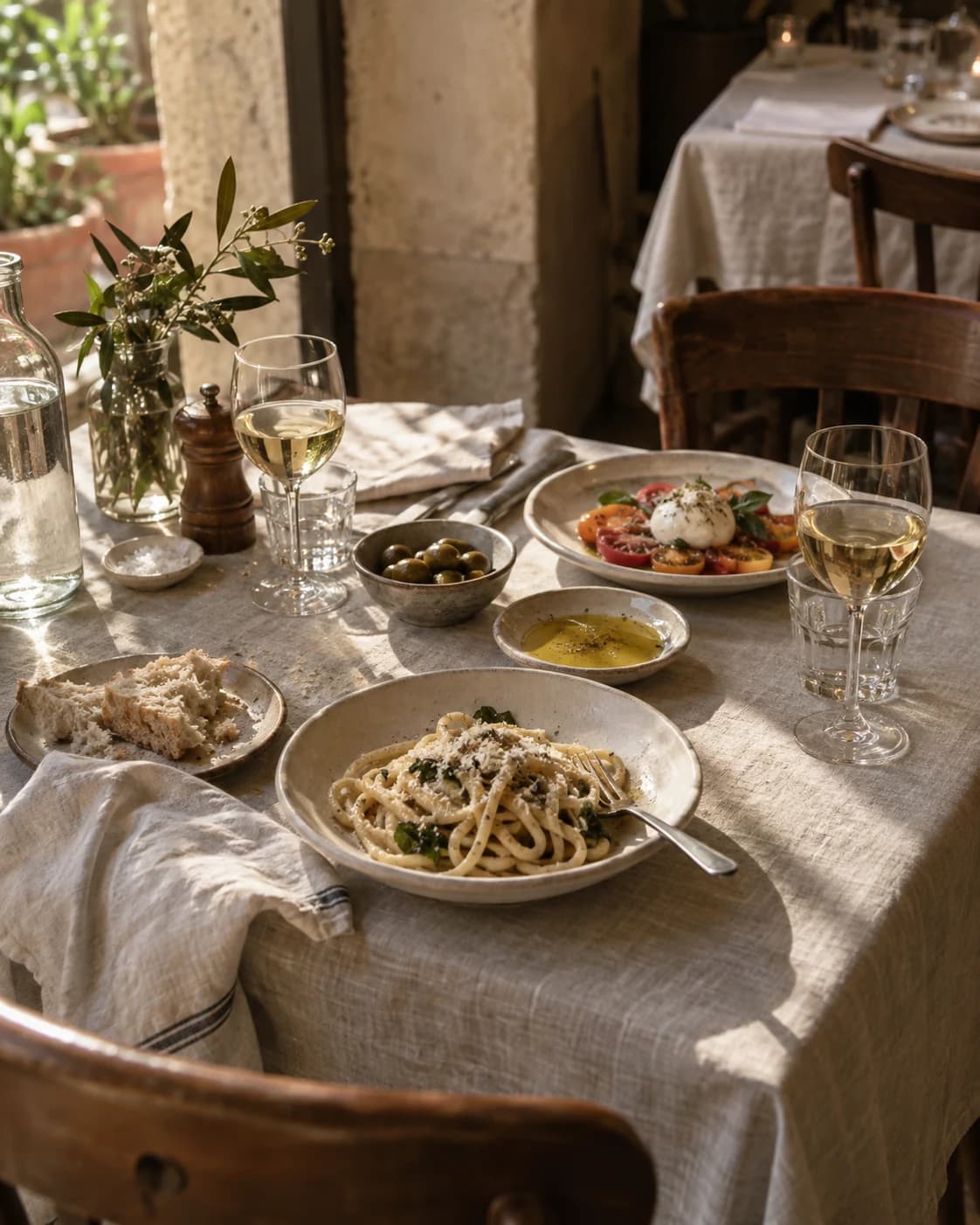
A place at our table.

Your kitchen. Off duty.
Keep the goal.
Change who you’re speaking to.
See the plan take a different shape. One answer from the owner can unblock one idea, while the rest of the plan moves forward.
The business goal
More Sunday bookings.
Who should this campaign reach?
The need behind the brief
A proper lunch together, without a day of preparation.
How much can your team make?
The idea behind the plan
Sunday at our table.
Working brief · Idea 01
Whose turn is it to cook?
Start with the family group chat.
- The opening
- “Whose turn is it to cook?”
- What to show
- Natural light. Real textures. A place someone can picture themselves sitting.
- What the draft needs
- Approved images and confirmed details of the offer.
Try it: these are prepared examples, not live generation. No brand information is changed.
01Purpose before volume
A topic is a starting point.
A campaign goes somewhere.
More posts won’t explain why any of them should exist. Put the goal, audience and idea in the same conversation.
Post three times this week
More Sunday bookings
The outcome
What needs to change?
“More Sunday bookings” gives the plan a specific job. It is more useful than “post three times this week.”
The family organizerA proper lunch together, without a day of preparation.
The friend making plansAn actual date in the diary, without another week of “we should get together soon.”
The person
Why would they care?
Two audiences can want different things from the same business. Each one brings a different reason to care.
- Around the table
- 01Recognition
- 02Proof
- 03Invitation
The throughline
What holds it together?
A shared pillar connects the posts. Each idea contributes a different part of the story, rather than repeating the same announcement.
02The workshop
Keep moving.
Keep the context.
The brief stays with the work as you move from a direction to a plan, from a plan to drafts, and from edits to lessons worth keeping.
01
Choose the direction.
Agree on the goal, the audience need and the pillars that fit.
More Sunday bookingsThe family organizer
02
Build the plan.
Give each idea a role, a format and the information it needs.
- 01RecognitionPhoto + caption
- 02ProofCarousel
- 03InvitationPhoto + caption
03
Refine the content.
Work on actual sentences and visual choices with the brief close by.
Join us for a wonderful Sunday lunch with the people who matter most.Sunday lunch. Someone else’s dishes.04
Decide what to keep.
Compare edits and review a proposed lesson before applying it to the next campaign.
Use the everyday detail. Keep the punchline short.
Kept by the team
From “we should post” to
something worth reviewing.
A plan that can become real work.
- 01Recognition
- 02Proof
- 03Invitation
Campaign Planning
Why the posts belong together.
The goal, the audience and the job of each idea.
You’re here
Join us for a wonderful Sunday lunch with the people who matter most.
Sunday lunch. Someone else’s dishes.
The idea becomes a draft.
Written from the audience, facts and voice behind the plan.
Explore
- Version 2 approved1
- M
- T
- W
- T
- F
A few useful
answers.
Start with a direction.
Build something connected.
Join the waitlist and we’ll get in touch when beta access is available.